
Overhanging trees
Mature trees drop leaves, flowers and fruit into pools all year. We skim thoroughly, clean baskets and brush every visit to keep debris from staining and decaying.
Coral Terrace sits just west of Coral Gables, with Bird Road, also known as SW 40th Street, as its main commercial corridor, and it shares some of that city's older, leafy character without the Mediterranean mansions. Homes are mostly single-family houses from the post-war decades, on lots large enough for a real backyard, and many of them have in-ground pools that have been part of the house for a long time.
What sets Coral Terrace apart on our route is shade. Decades of growth have left many yards with tall trees overhanging the fence line: mangos, avocados, oaks and royal poincianas. Shade keeps water comfortable in summer, but leaves, flowers and fruit drop into the pool constantly, and shaded water loses the sunlight that helps keep algae in check. Debris that sits overnight on the floor starts staining plaster and feeding growth.
Pools here also tend to be older, with finishes that have been resurfaced once or twice and equipment that has been replaced piecemeal. That combination of organic debris, shade and aging surfaces makes brushing, filter maintenance and timely algae treatment the core of our work in Coral Terrace.
ZIP codes on our Coral Terrace route: 33144, 33155, 33165.
Black spot algae on shaded walls, brown stains from mango leaves and a filter that clogs every week bring Coral Terrace homeowners to us.
Mature trees drop leaves, flowers and fruit into pools all year. We skim thoroughly, clean baskets and brush every visit to keep debris from staining and decaying.
Water in shaded corners gets less sunlight and circulation, which is where algae, including stubborn black spot, likes to start. Targeted brushing and treatment keep it from rooting in.
Rough or patched plaster gives algae more places to hold. Balanced chemistry protects the surface and makes cleaning more effective.
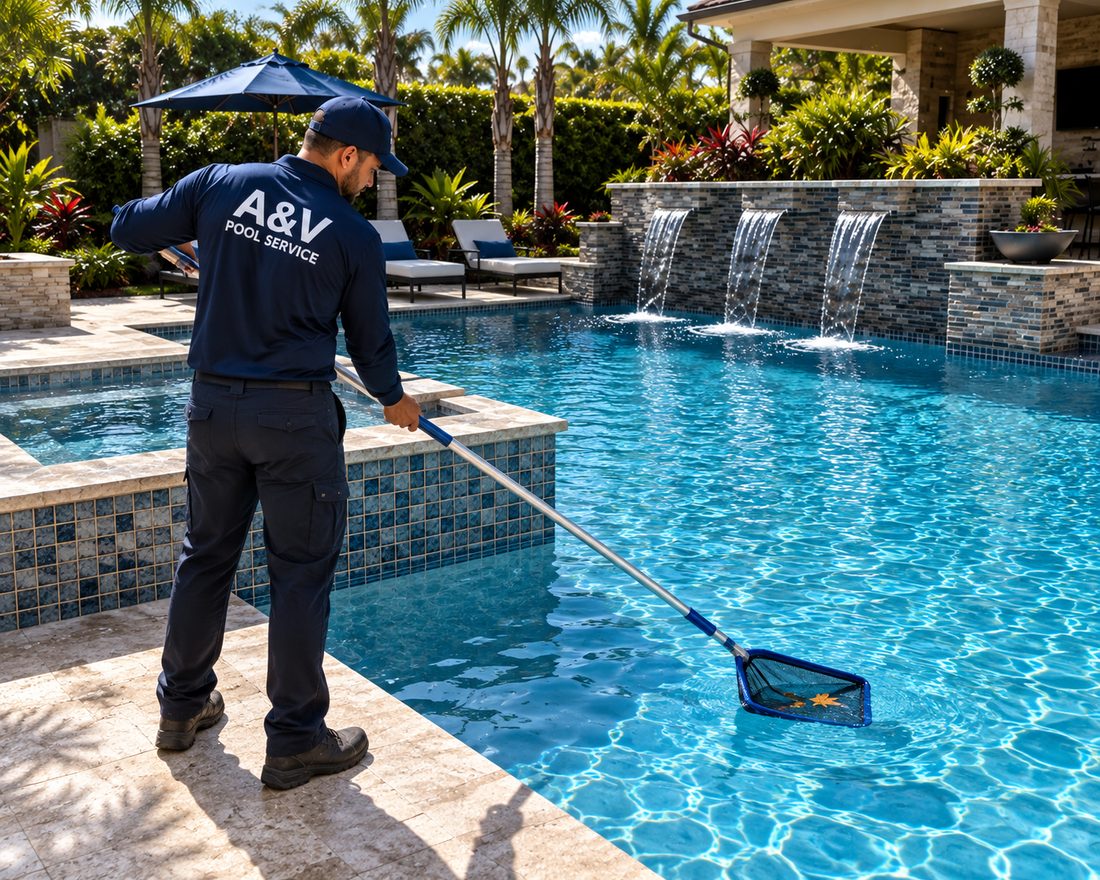
Constant leaf and fruit drop means Coral Terrace pools often need a thorough deep clean and filter service to reset the pool.
Learn more →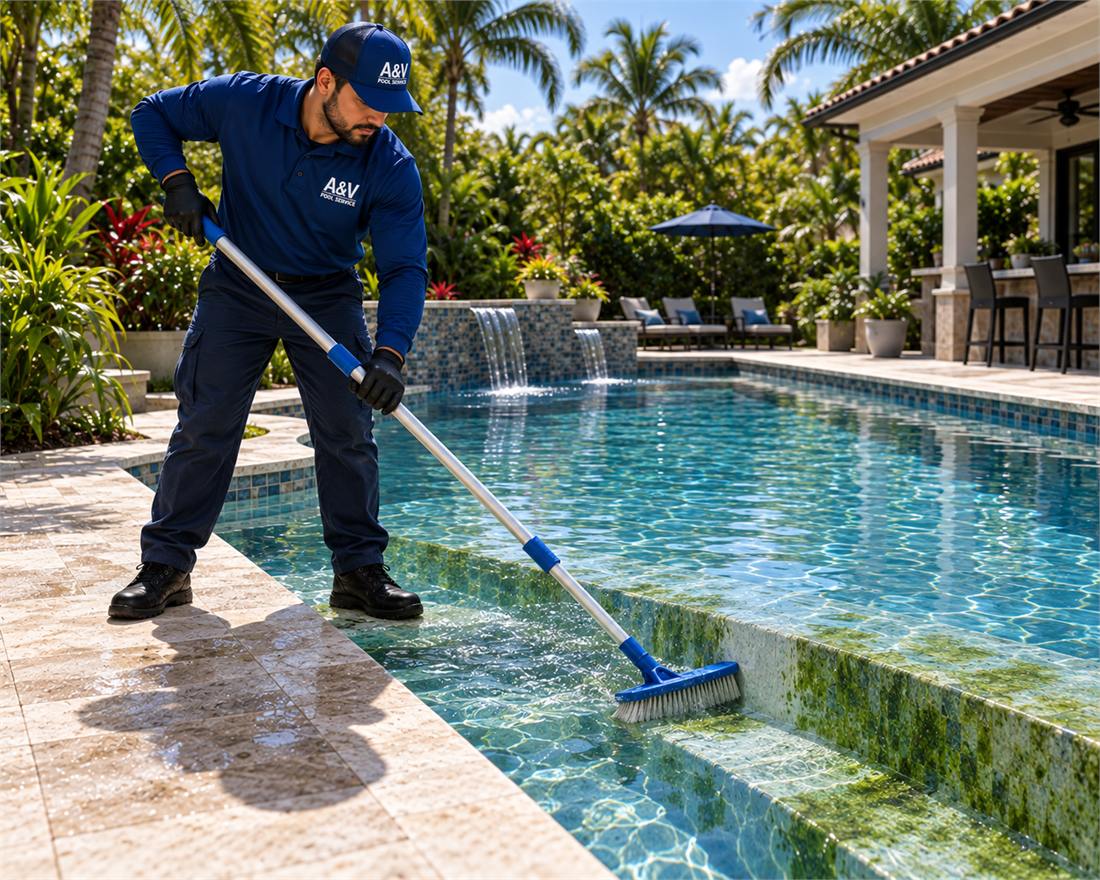
Shade, organic debris and older plaster make algae, especially black spot, a persistent problem that needs targeted treatment.
Learn more →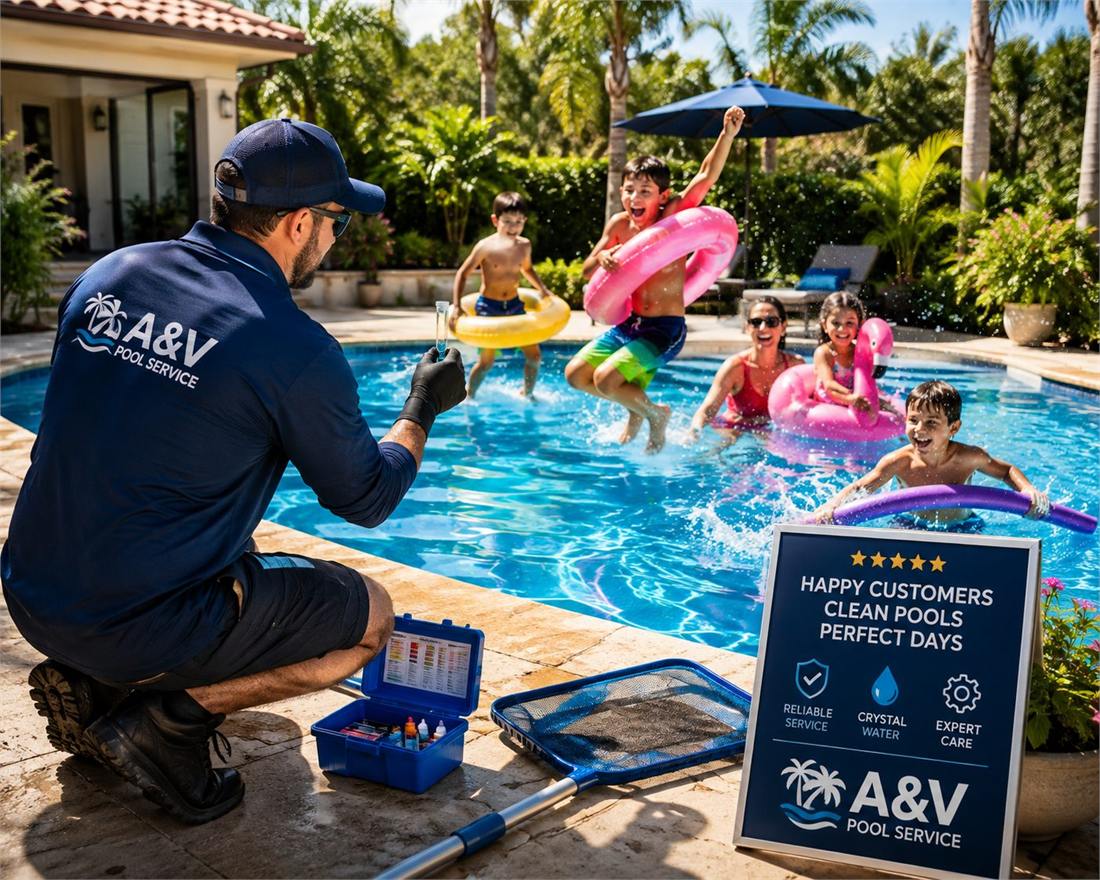
Weekly visits keep up with the tree litter so it never has time to stain or feed algae.
Learn more →Many trees drop old leaves and flower in spring, and pollen coats pool surfaces. Filters load up quickly, so we clean them more often.
Fruit and heavy rain arrive together. Fallen fruit adds sugars and organics to the water, and storms dilute chlorine, so we test and treat promptly.
Big trees can drop limbs and heavy debris into pools during storms. We remove debris, clean filters and check equipment before restarting.
One licensed crew for cleaning, repairs and leaks.
Yes, though it takes persistence. Black spot roots into plaster, so we brush it aggressively, treat it directly and then keep chlorine steady so it does not return. Improving circulation in shaded corners also helps.
It can be. Rotting fruit adds sugars and organics that consume chlorine and feed algae. We remove debris each visit, and trimming branches over the water makes a big difference.
Tannins from leaves that sit on the floor overnight leach into the plaster. Removing debris quickly and keeping chlorine up prevents most staining, and existing stains can often be lightened.
Probably not. Heavy tree litter loads filters quickly. We clean it on a schedule that matches your yard and check for torn cartridges or grids while we are at it.
We cover ZIP codes 33144, 33155 and 33165, including the Bird Road area, the SW 40th Street corridor and Coral Terrace residential streets. Call 954-691-6742 to schedule service.
Coral Terrace connects on our route with Westchester, West Miami, South Miami and Olympia Heights.
Get a free quote today and let's get your water sparkling before the weekend.