
Green algae
The most common and the fastest to grow. It floats and clings to walls, and can turn a pool cloudy green in days. It responds well to correct shock levels and filtration.
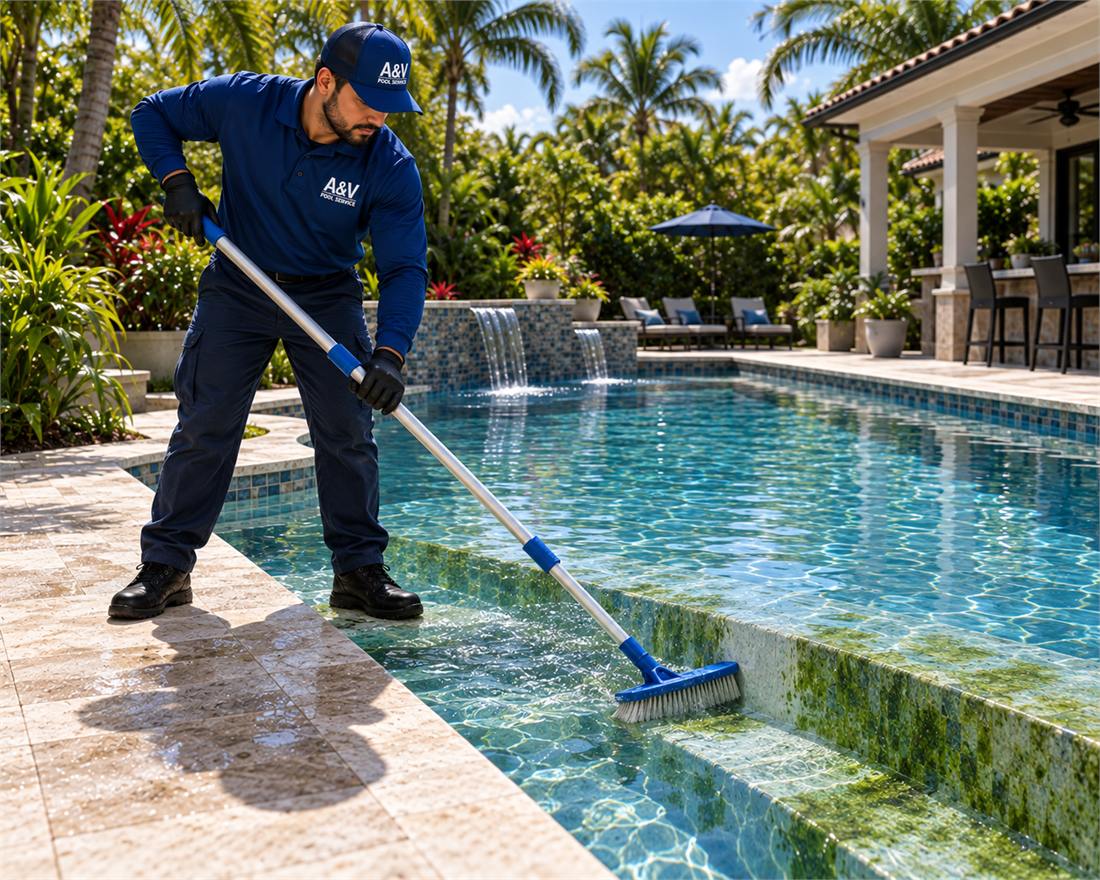
Mustard algae hiding in the shade, black algae rooted in the plaster, or a green bloom after a storm — each type needs a different chemical approach and a different amount of brushing. Guessing wastes chemicals and time, and the algae comes right back.
We identify what you are dealing with, treat it correctly, and fix the underlying cause: poor circulation, a tired filter, too much stabilizer, or chemistry that keeps drifting between visits. South Florida's warm water means algae never really goes dormant here, so the fix has to last.
If the whole pool has already turned green and cloudy, our green pool cleanup service is the faster route. For spots, patches and algae that keeps returning, this is the one.
The color, the location and how it reacts to brushing tell us what we are fighting.
The most common and the fastest to grow. It floats and clings to walls, and can turn a pool cloudy green in days. It responds well to correct shock levels and filtration.
Yellow-brown dust that collects in shady corners and brushes off easily but returns within days. It resists normal chlorine and hitches a ride on swimsuits, toys and pool tools.
Dark blue-black spots with roots in plaster and grout. The protective outer layer shields it from chlorine, so it takes firm brushing plus targeted treatment, repeated until the roots are gone.
Not algae but a bacteria that collects in low-flow spots, skimmers and light niches. It needs the same thorough approach: brush, sanitize, and fix circulation.
Stabilizer that is too high, low chlorine between visits, dead spots with no circulation, and dirty filters all let algae return. We correct the cause, not just the symptom.
Leaves, fertilizer runoff and rain add nutrients to the water. When algae keeps returning, we test phosphates and treat them if needed.
We confirm the type and test chlorine, pH, stabilizer and phosphates to see what let it grow.
Targeted chemistry plus brushing matched to your finish — firm on plaster, gentler on pebble, tile and vinyl.
We clean or replace filter media, fix circulation dead spots, and set the chemistry so it cannot come back.
The more stabilizer in the water, the more free chlorine you need. When that ratio drifts, algae gets a foothold.
Mustard algae spreads on anything that has been in an infected pool. Clean floats, toys and tools after treatment.
Steps, corners and behind ladders get the least flow. A weekly brush there stops algae before it settles.
Circulation carries chlorine to every corner. Short pump hours in summer are a common cause of repeat algae.
Catching algae early makes treatment quicker and cheaper.
Shade, trees and warm water make algae a year-round fight. We treat it in every city below, with a lot of that work in Coral Gables algae removal, Plantation, Pinecrest, Davie and Cooper City.
Usually because the cause was never fixed: chlorine too low for the amount of stabilizer in the water, poor circulation, a dirty filter, or algae surviving on toys and equipment. We treat the algae and the reason it grew.
Black algae has roots and a protective coating, so chlorine alone rarely works. It needs firm brushing to break the coating, targeted treatment on the spots, and repeat treatment until the roots are gone. Brush type depends on your pool finish.
It is not usually dangerous to swimmers, but it makes water unsanitary and is stubborn. It clings to swimsuits, toys and equipment, so everything that has been in the pool needs cleaning during treatment.
Green algae often clears in a few days. Mustard and black algae usually need several treatments over one to two weeks to fully eliminate.
Yes. High cyanuric acid (stabilizer) weakens chlorine's ability to kill algae. It is common in pools that have used stabilized tablets for years. We test for it and correct it.
When it helps, yes, but algaecide is a supporting tool. The real work is correct chlorine, brushing, filtration and circulation.
Get a free quote today and let's get your water sparkling before the weekend.