
Airport soot and dust
Fine particles from nearby runways settle on the water and the tile line. They load filters and use up chlorine faster than you would expect.
Miami Springs was developed in the 1920s by aviation pioneer Glenn Curtiss and partner James Bright, and many of its homes still carry the flat roofs, stucco walls and rounded parapets of the Pueblo Revival style. The streets curve around the golf course and along wide, planted parkways such as Curtiss Parkway, and the Miami Canal forms the line between the city and Hialeah. Most pools here were added to existing homes over the decades, so no two backyards are laid out quite the same.
Living next to Miami International Airport has a side effect that owners notice on their deck furniture: a fine gray film of soot and dust. That same film settles on the pool surface, clings to the tile line and gets pulled into the filter. It also consumes chlorine and can throw off test readings, which is why water testing and balancing is one of the services we do most here. We clean the tile line regularly and keep the filter from loading up with that fine material.
The older plaster common in Miami Springs is sensitive. If calcium hardness is too low, water pulls it out of the plaster and the surface gets rough; if it is too high, scale forms. Add the leaves from the parkway trees and you have a surface that stains quickly when brushing slips. We keep the water in a narrow, plaster-friendly range and brush every visit.
ZIP code on our Miami Springs route: 33166.
Soot on the waterline, rough or stained plaster, or an older pump that needs a repair instead of a sales pitch: that is typical work for us in Miami Springs.
Fine particles from nearby runways settle on the water and the tile line. They load filters and use up chlorine faster than you would expect.
Older pool surfaces etch when water is aggressive and scale when it is too hard. Balanced calcium and pH protect them.
Mature trees along the parkways and golf course drop leaves that stain older plaster if they sit on the floor.
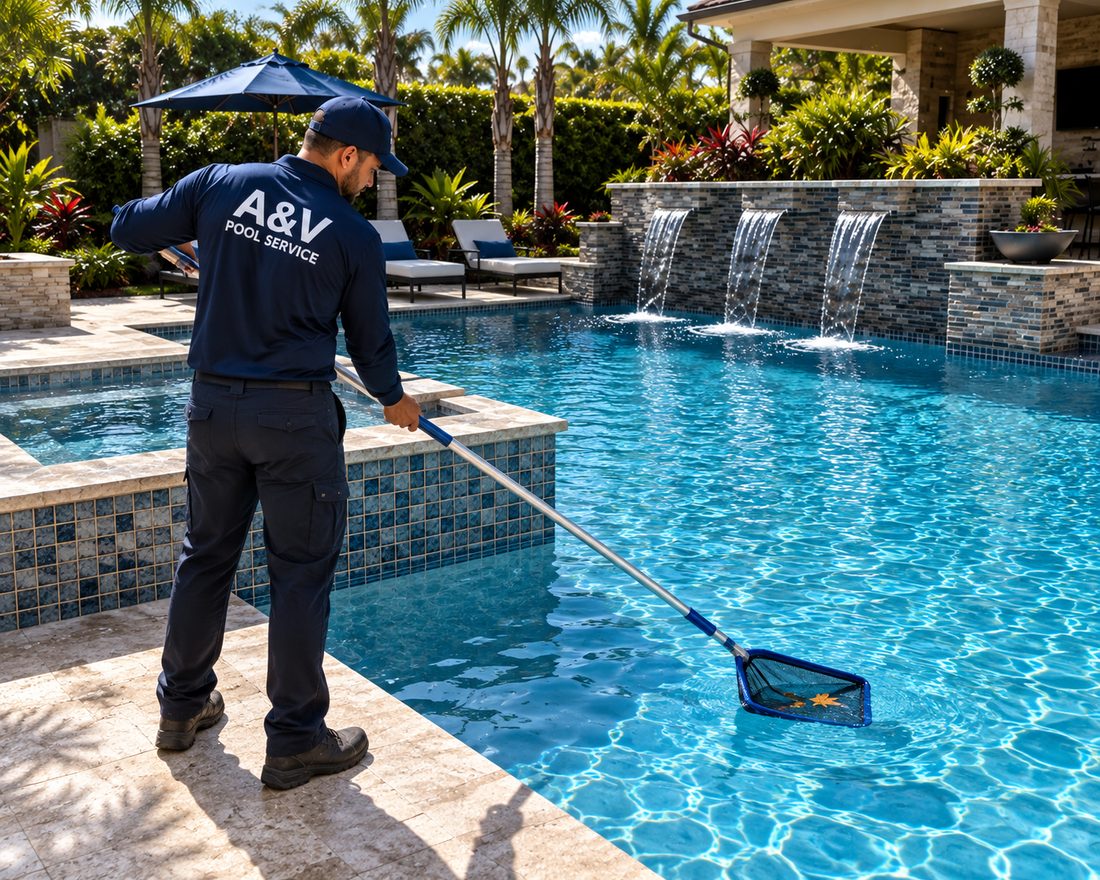
A thorough clean removes the soot line and the fine sediment that settles on the floor, so weekly care starts from a clean surface.
Learn more →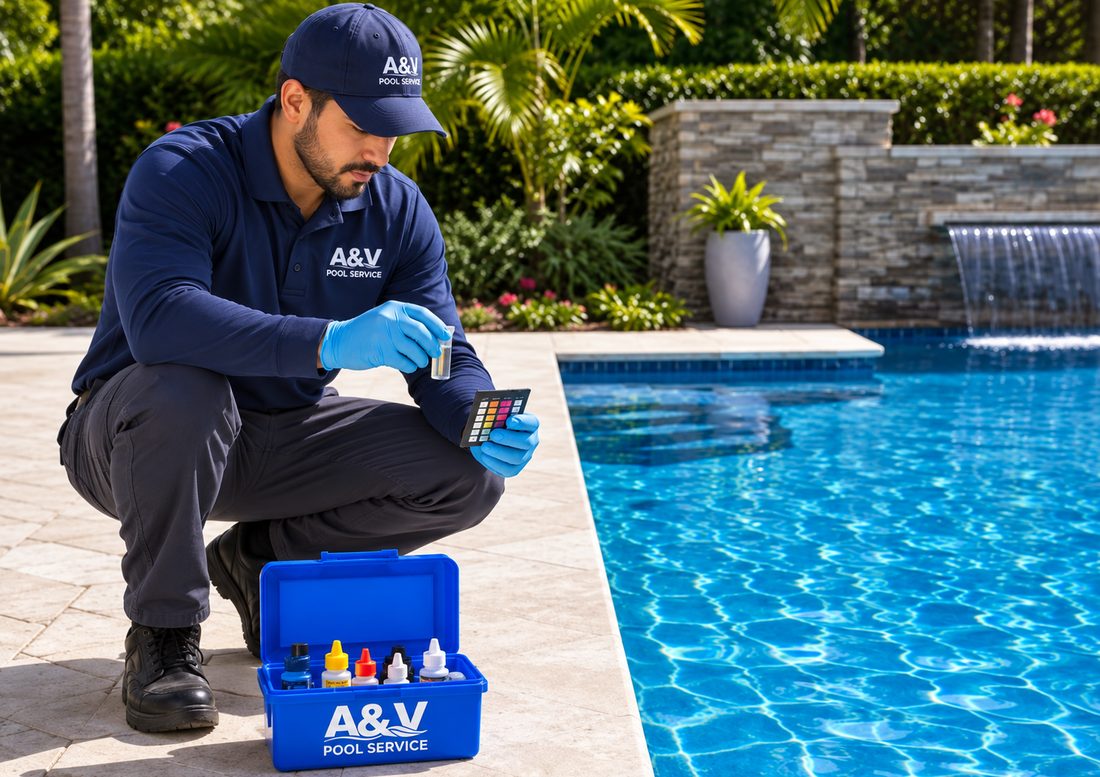
Airborne particles and older plaster make accurate testing essential here; a small imbalance shows up as etching or scale.
Learn more →
Weekly service keeps the tile line clean and the chemistry steady, with chemicals included and the same technician each visit.
Learn more →Less rain means airborne dust stays on the pool instead of washing away. We brush the tile line and check the filter more often.
Storms rinse roofs and decks into the water and dilute chlorine. We rebalance after heavy rain rather than wait a week.
Big parkway trees can drop limbs into pools. We clear debris and inspect the pump and heater before anything is restarted.
One licensed crew for cleaning, repairs and leaks.
Most often it is soot and dust from the airport mixed with body oils and sunscreen. It sticks to the tile at the surface. Regular tile cleaning and a well-maintained filter keep it from building up, and existing rings can usually be removed without draining.
Not necessarily. Rough plaster in older pools is often caused by low calcium or low pH slowly dissolving the surface. Correcting the balance stops further damage, and we will tell you honestly when resurfacing really is the next step.
Often, yes. Many motors only need seals or bearings. We diagnose the problem first and give you a straight repair-versus-replace answer before any work begins.
Yes. Our team speaks English and Spanish, and you can call or text 954-691-6742 in either language.
Miami Springs is ZIP code 33166, and we cover the whole city, from the golf course neighborhoods to the blocks along the canal.
Miami Springs sits on one route with Virginia Gardens, Medley, Hialeah and the City of Miami.
Get a free quote today and let's get your water sparkling before the weekend.