
Phosphates from tree cover
Heavy leaf and flower drop loads the water with phosphates that feed algae. We test and treat them directly instead of relying on repeated shock.
Coral Springs was built as a master-planned community starting in the 1960s, and it was designed green from the start. Landscaping rules and decades of growth have left the city with thick tree cover along its boulevards and in its backyards. Ramblewood and the older eastern sections hold some of the first homes, many with pools from the 1970s and 1980s. The Coral Springs Country Club area and Eagle Trace add golf-course lots, and the western side toward the Sawgrass Expressway and the Heron Bay area filled in later with newer gated subdivisions.
All those trees feed pools. Leaves and blossoms break down into phosphates, and phosphates feed algae no matter how much chlorine is in the water. That is why we see so many Coral Springs pools where the owner keeps shocking and the green keeps coming back. We remove the food source instead: skim, brush and vacuum every week, measure phosphates, treat them when they climb, and set filter cleaning by the real debris load instead of a fixed calendar. Where roots have grown close to older plumbing, we watch for pressure changes that point to a cracked or restricted line.
Coral Springs also has a large share of homeowners associations, townhome communities and condo complexes, each with at least one shared pool and often a spa. Those amenity pools are busy after school and on weekends, and managers need records. We keep a logged chemistry history, provide a certificate of insurance on request and handle the private backyard pools inside the same communities, so one crew knows the whole neighborhood. Details are on our commercial and condo pool service page.
ZIP codes on our Coral Springs route: 33065, 33067, 33071, 33076.
Algae that returns a week after shocking, an HOA pool that won't pass a manager's walk-through, or leaves clogging the pump basket every few days — we fix the cause, not just the color.
Heavy leaf and flower drop loads the water with phosphates that feed algae. We test and treat them directly instead of relying on repeated shock.
Community pools see surges of swimmers after school and on weekends. Frequent testing and logged readings keep them clear and ready for inspection.
In the older eastern neighborhoods, mature trees grow close to pool lines. Rising pressure or weak returns can signal a root problem we can track down.
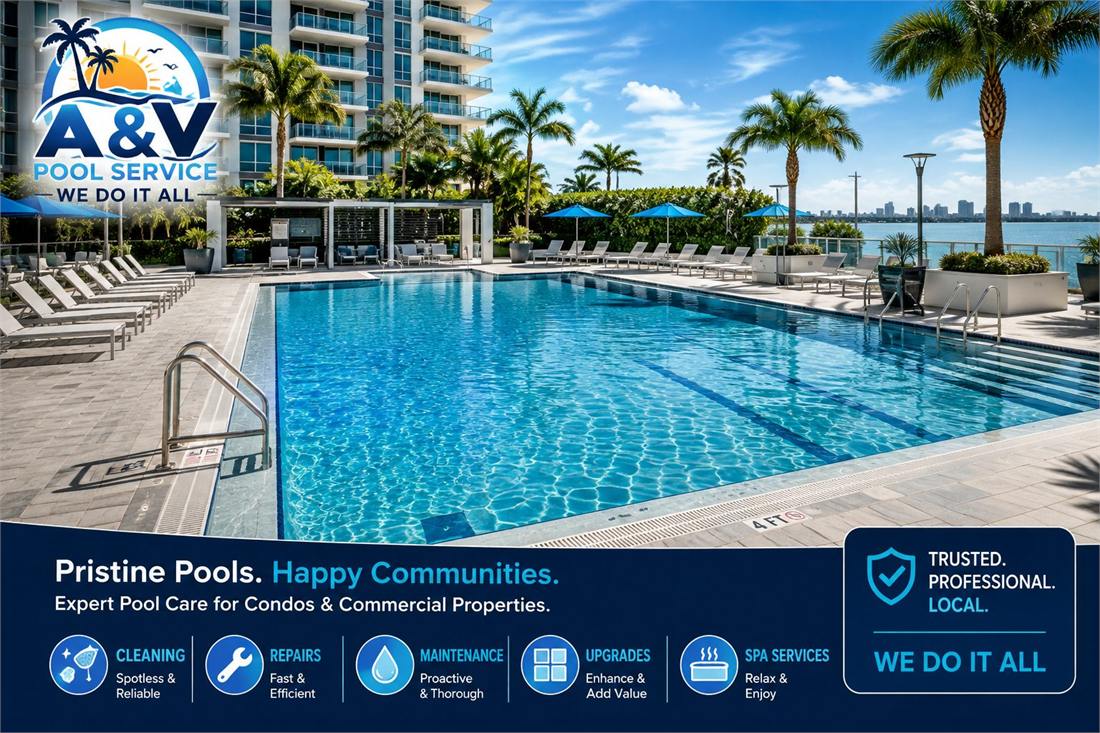
Coral Springs has many HOA, townhome and condo communities with shared pools that need documented chemistry and a contractor who carries insurance paperwork.
Learn more →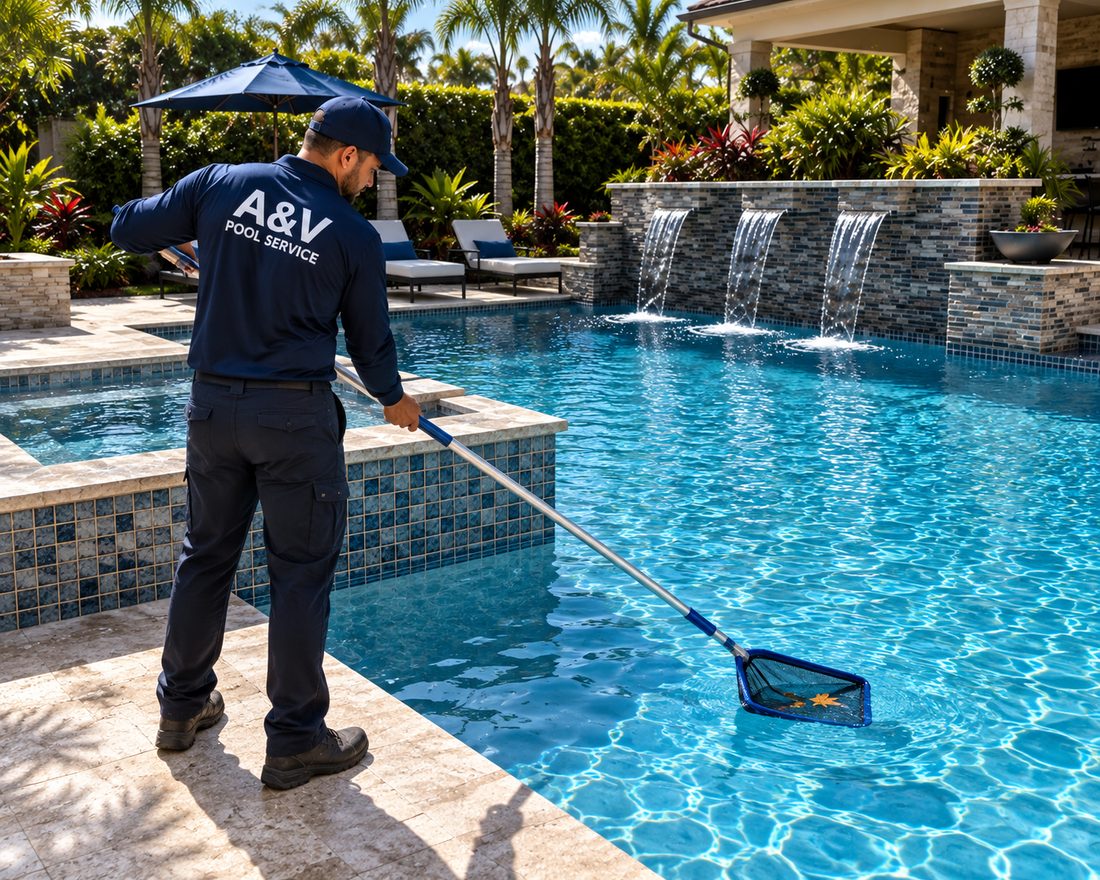
Tree-lined lots mean debris settles fast, and a full clean clears the floor, filter and baskets so weekly care can keep up.
Learn more →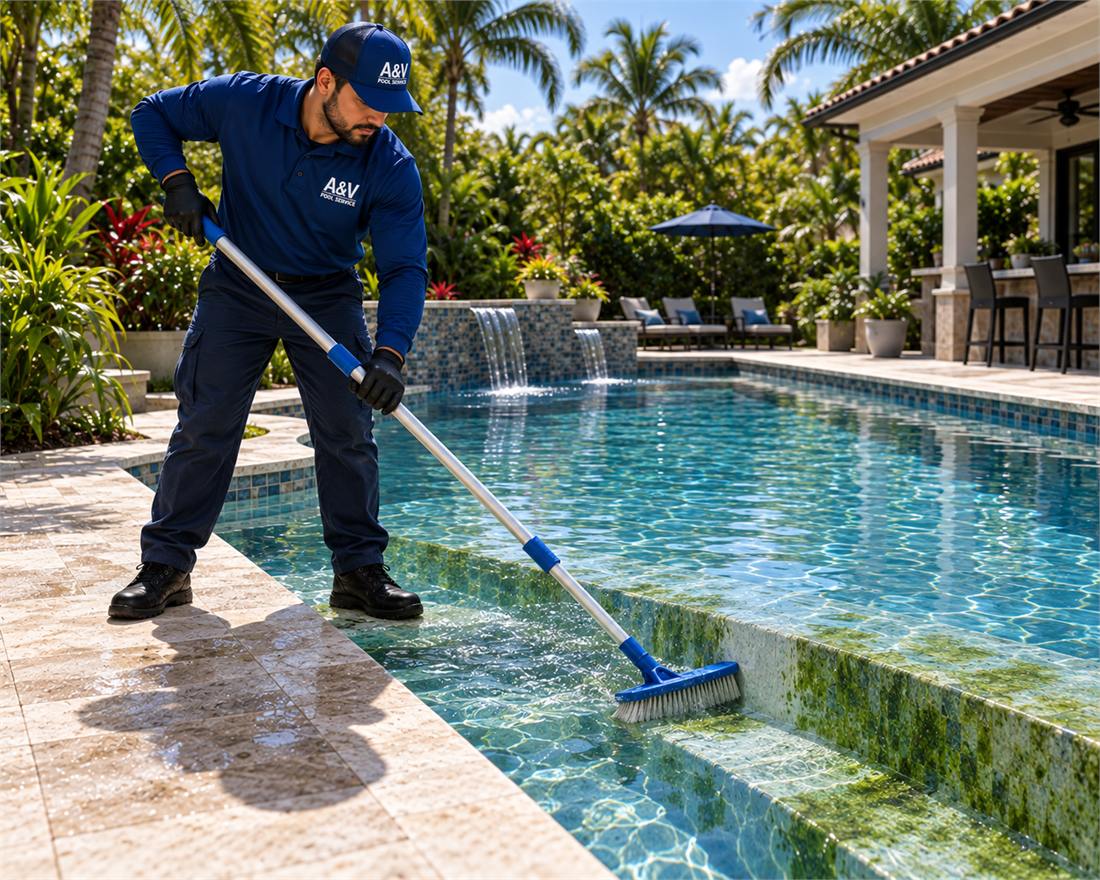
Phosphate-rich water under heavy canopy makes algae a repeat problem here, and it takes brushing, the right chemistry and phosphate control to end the cycle.
Learn more →Cooler, drier months slow algae, but spring pollen and leaf drop peak toward March and April. Filters get cleaned on a shorter cycle then.
Community pools are at their busiest while kids are out, and afternoon storms dilute chlorine daily. HOA pools often move to extra weekly visits.
Tree-heavy streets mean pools fill with leaves and branches after a storm. We clean them out and check pumps, timers and breakers before startup.
One licensed crew for cleaning, repairs and leaks.
Usually phosphates. Leaves and blossoms from all the trees here break down into nutrients that algae feeds on, and shocking only kills what is already growing. Lowering phosphates, brushing and good circulation stop the cycle.
Yes. We service community and condo pools and spas, log every chemistry reading, and provide a certificate of insurance to the board or management company on request. We can also service residents' private pools in the same community.
Yes. We service private pools in gated and golf-course communities across the city. We just need gate access set up with the guardhouse or HOA.
Possibly. Mature trees near older plumbing can crack or restrict lines. We check the filter and pump first, then pressure-test the lines if the problem points underground, and our crew also handles leak detection.
33065, 33067, 33071 and 33076, from Ramblewood and the older eastern neighborhoods to the newer western communities.
From Coral Springs our technicians continue into Parkland, Coconut Creek, Margate and Sunrise.
Get a free quote today and let's get your water sparkling before the weekend.