
New plaster curing
Freshly plastered pools need daily-to-weekly brushing and careful pH and calcium control for weeks. Getting this wrong can leave permanent scale or discoloration.
Princeton used to be mostly farmland and plant nurseries along US-1 and SW 248th Street. Over the last couple of decades, large new subdivisions have filled in many of those fields, and today a lot of the pools we service here are only a few years old, sitting beside nurseries and groves that are still in business.
New pools need their own care. Fresh plaster keeps curing for weeks after it is filled and sheds fine dust into the water; if pH and calcium are not managed during that period, the surface can scale or stain for good. We handle start-up brushing and balancing on new pools, and we watch newer builder equipment, like salt systems and variable-speed pumps, to make sure it is set up correctly from the start.
The older rural properties are a different story. Some still rely on private wells, and well water can carry iron and hardness that turn plaster rust-colored or leave scale on tile. On those pools we test the fill water before planning treatment. Across the whole area, dust from nursery work and open fields settles on the water and loads filters faster than in the suburbs further north.
ZIP codes on our Princeton route: 33032, 33033, 33177.
Plaster dust in a brand-new pool, rust stains from well water or a filter clogged with field dust — call and we'll set a plan.
Freshly plastered pools need daily-to-weekly brushing and careful pH and calcium control for weeks. Getting this wrong can leave permanent scale or discoloration.
On properties with wells, iron and hardness can stain and scale. We test source water and use sequestrants where they are needed.
Open land and active nurseries send fine dust into pools, clouding water and loading filters. We clean filters on a shorter cycle here.
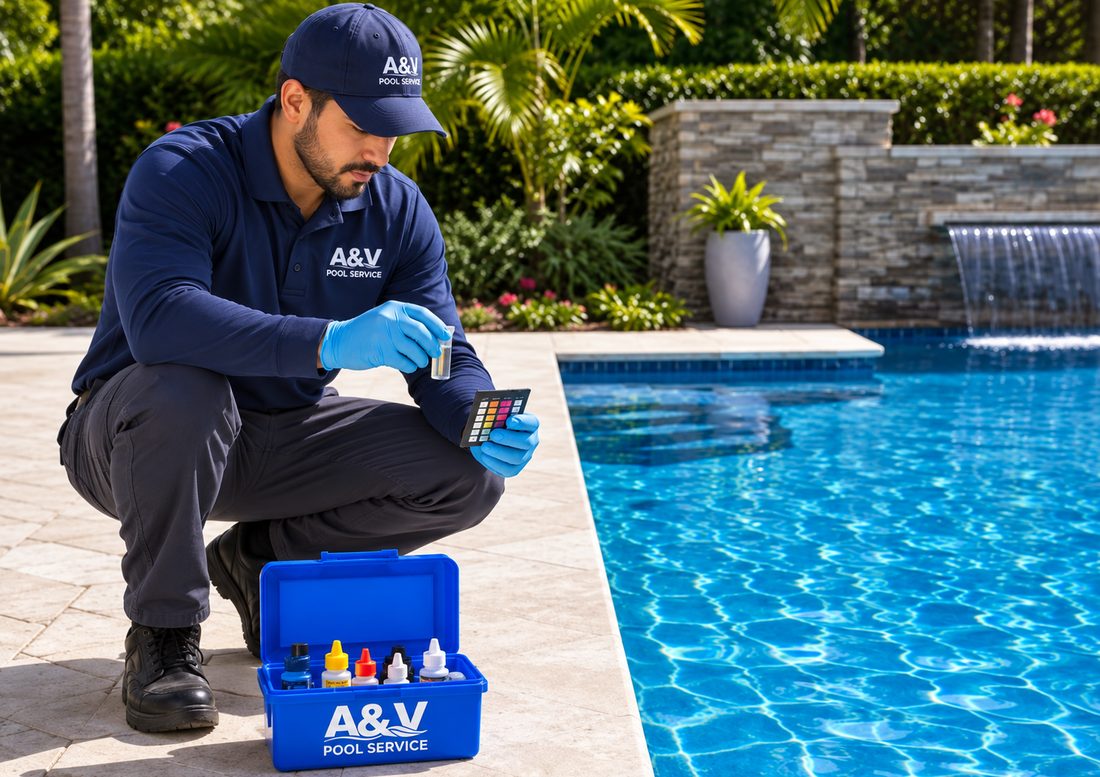
New plaster start-ups and well-water fills both depend on precise testing; our water testing and chemical balancing starts with what is actually in your water.
Learn more →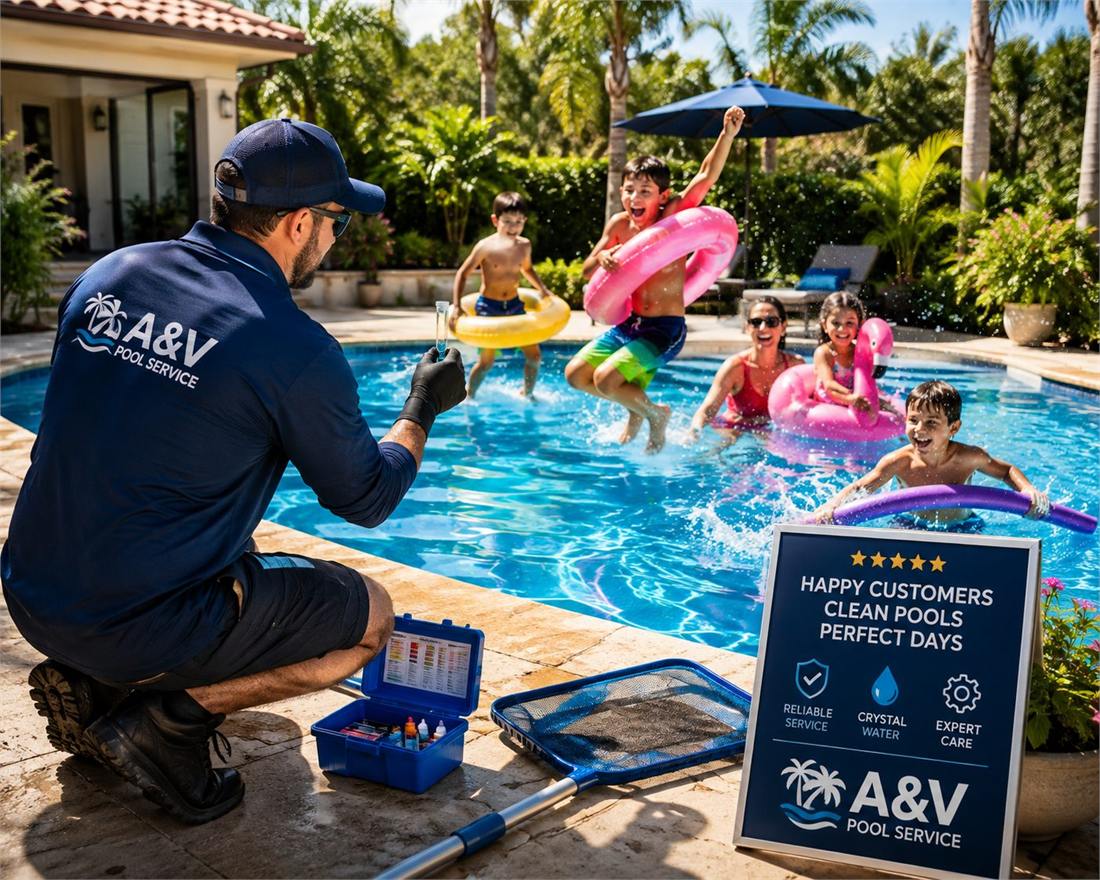
Weekly visits keep new equipment tuned and catch warranty issues early on recently built homes.
Learn more →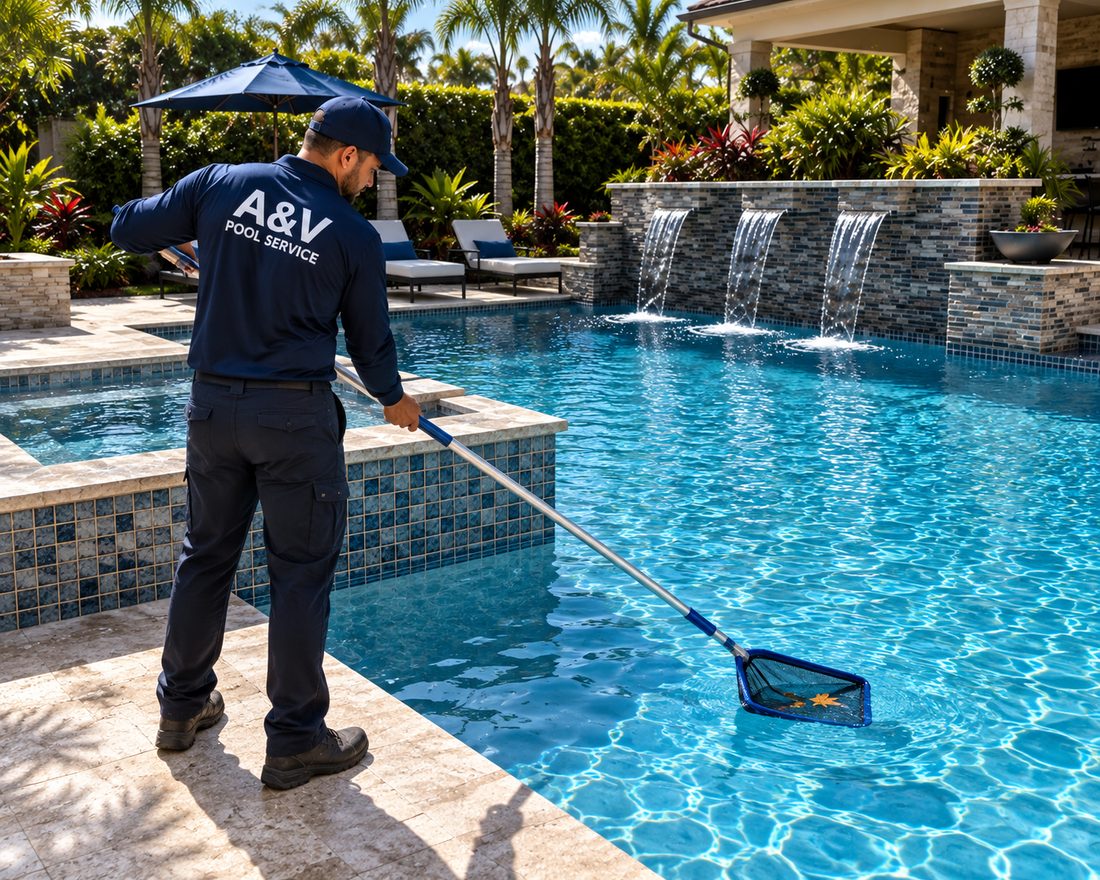
Field dust and construction debris from nearby building sites settle on the floor and need regular vacuuming.
Learn more →Wind and dry fields carry more dust into pools, and growing season means more activity at nearby nurseries. Filters load quickly.
Afternoon storms wash dust and fertilizer from lawns and fields into the pool. We rebalance after heavy rain and watch phosphate levels.
South Dade has open exposure to storm winds. We help prepare pools and inspect new equipment before restarting after a storm.
One licensed crew for cleaning, repairs and leaks.
New plaster needs regular brushing and tightly controlled pH and calcium for the first several weeks. We can take over start-up care and make sure the salt system and pump are programmed correctly.
Well water often carries dissolved iron that oxidizes when chlorine is added, leaving brown or orange stains. We test the source water, use a sequestrant and treat existing stains, often without draining.
Princeton pools collect more fine dust from fields, nurseries and nearby construction than suburban pools. We clean filters more frequently and check that the pump runs long enough to keep up.
Warranty terms come from the builder and manufacturer, not from us. We can document equipment problems during weekly visits so you have details to share with them.
We cover 33032, 33033 and 33177, including the US-1 corridor and the newer neighborhoods around SW 248th Street. Call with your address to confirm your day.
Princeton sits between Naranja, Homestead, Leisure City and Goulds, all on our south Dade routes.
Get a free quote today and let's get your water sparkling before the weekend.