
Aging plaster and black algae
Pitted plaster gives black algae a place to root. It needs aggressive brushing and targeted treatment, not just more chlorine.
Goulds grew up along the railroad and the old Dixie Highway corridor, when South Dade farms shipped produce north, and the Cauley Square historic village off US-1 still recalls those days. Many of the homes here are long established, on lots with mature shade trees, and many pools have been in the ground for decades, with newer development mixed in.
Older plaster is the main reason algae control is such a large part of our Goulds work. As plaster ages, it develops tiny pits, and black algae roots into them; brushing alone does not remove it once it is established. Shady corners under big trees attract mustard algae, which looks like dust and returns if you treat it like dirt. After a heavy storm, a pool can also get a straightforward green bloom.
Each of those needs a different approach, so we identify what is growing before treating it. Black algae needs a stiff brush and targeted treatment; mustard algae needs higher chlorine and cleaning of everything it touched; green blooms respond to shock and filtration. Getting it right the first time saves chemicals and repeat visits.
ZIP codes on our Goulds route: 33170, 33190.
Dark spots on older plaster, yellow dust in a shady corner or a pool that turned green after a storm — we'll identify it and treat it properly.
Pitted plaster gives black algae a place to root. It needs aggressive brushing and targeted treatment, not just more chlorine.
Big trees shade parts of many pools, and mustard algae settles in those corners. It needs higher chlorine and cleaning of tools and toys too.
Leaves and seed pods from mature trees raise chlorine demand and stain older surfaces. Regular skimming keeps it manageable.
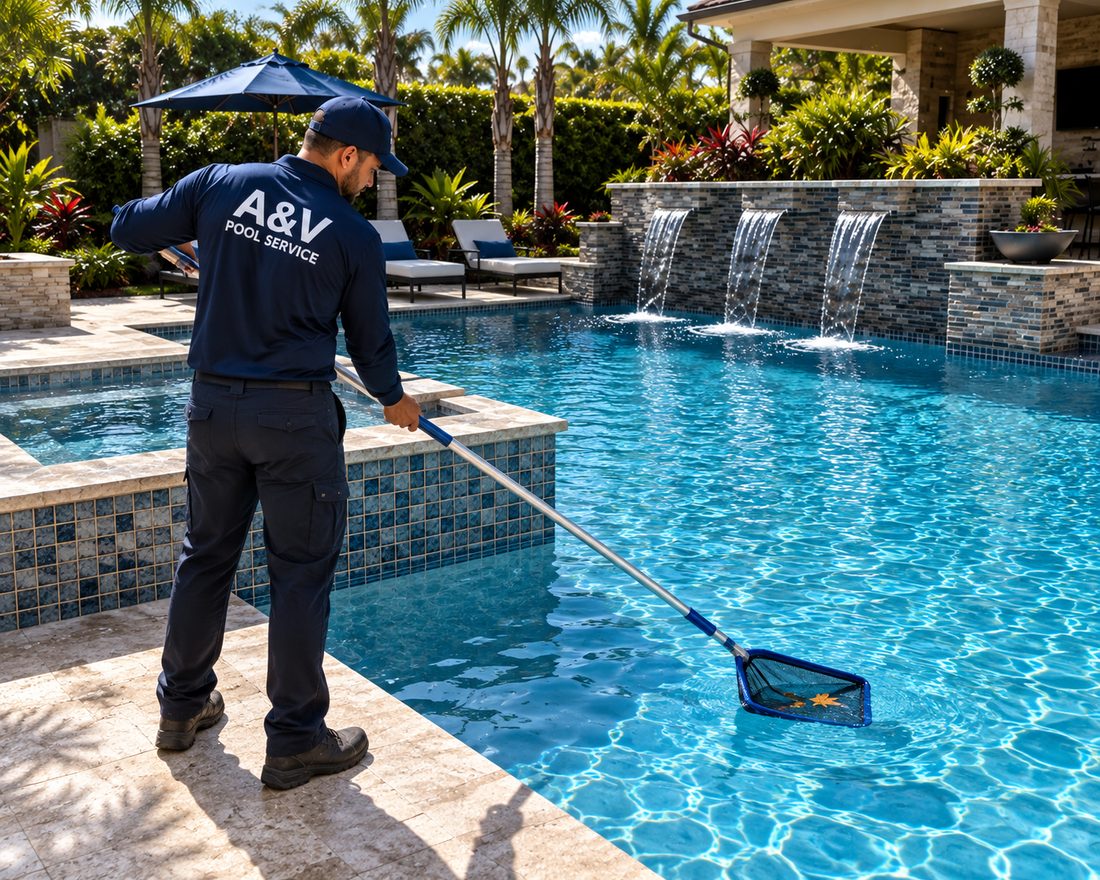
Mature trees mean leaves and pods on the floor, and older plaster holds dirt, so a thorough clean is often where Goulds service starts.
Learn more →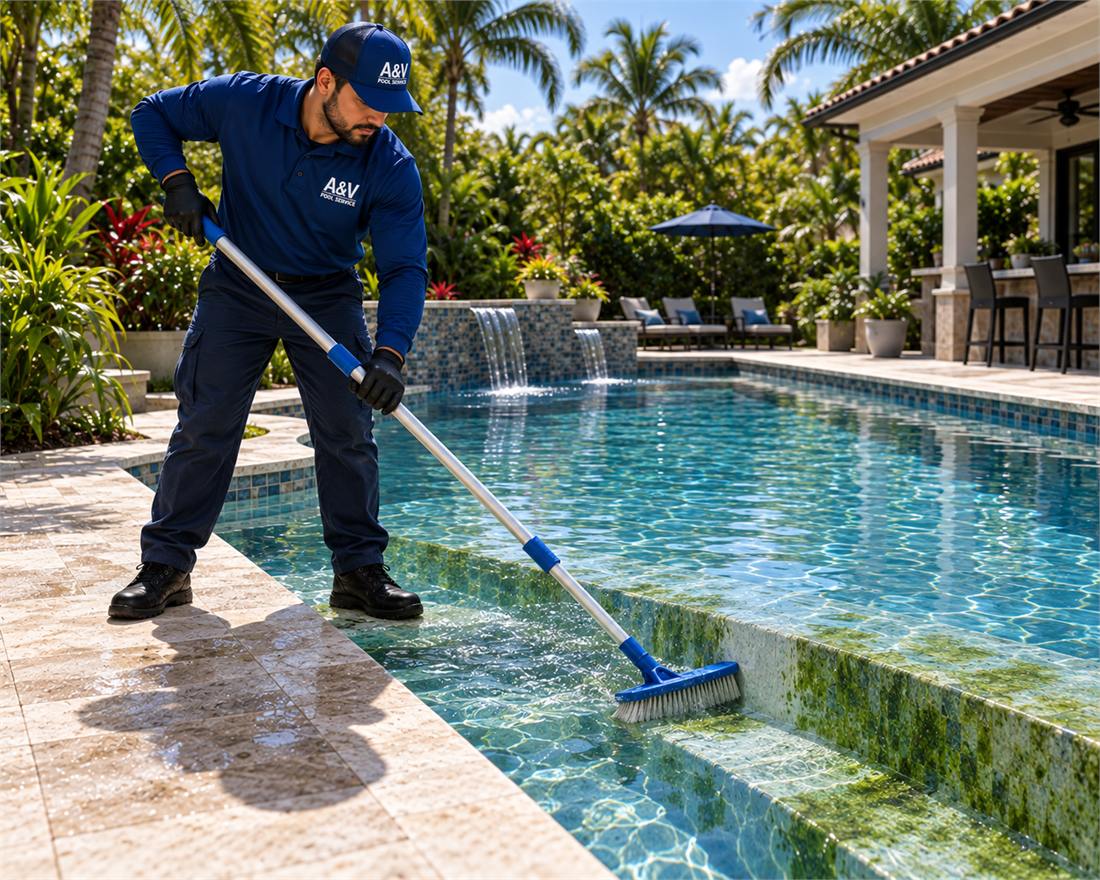
Black, mustard and green algae each show up here, and our algae removal matches the treatment to the type.
Learn more →
Weekly brushing and balanced chemistry keep algae from getting established in older plaster in the first place.
Learn more →Slower algae growth makes this a good time to treat established black algae spots and plan resurfacing if needed.
Warm water, shade and daily rain push algae hardest. We brush more and keep chlorine higher through the rainy months.
Old trees shed heavy debris in storms. We clear pools, check pumps and treat any bloom quickly after the storm passes.
One licensed crew for cleaning, repairs and leaks.
Most often black algae rooted in older, pitted plaster. We brush it with a stiff brush, apply targeted treatment and keep chlorine up until it is gone, then watch those areas every week.
It is likely mustard algae, which thrives in shade and survives on pool equipment and toys. We raise chlorine, brush thoroughly and clean everything that was in the water to stop it returning.
Not always. Many pools stay clear with good brushing and balanced chemistry; resurfacing becomes worth it when the plaster is badly pitted and algae keeps coming back despite care.
No. Trees add shade and debris, but frequent skimming, a clean filter and correct chlorine levels usually keep things under control.
33170 and 33190, including the US-1 corridor and the SW 216th Street area. Call with your address and we will confirm your service day.
Goulds links our routes in South Miami Heights, Princeton, Cutler Bay and Naranja.
Get a free quote today and let's get your water sparkling before the weekend.