
Fruit-tree and flower debris
Mango, avocado and flowering trees drop leaves, blossoms and fruit that break down in the water and feed algae. Regular skimming and a clean filter keep ahead of it.
South Miami Heights is an unincorporated neighborhood of mostly single-story concrete-block homes, many from the 1970s and 1980s, with newer infill houses mixed in along the SW 112th Avenue side and near Coral Reef Drive. The backyards tend to be lived-in and planted with whatever the family likes to eat, which in South Dade usually means mango, avocado and other fruit trees.
Those trees are the first thing we notice on a new account. Leaves, blossoms and dropped fruit sink and rot in the water, driving up chlorine demand and phosphates, and in late spring the flowering trees coat the surface. A pool that is ignored for even two weeks in summer can turn green quickly.
That is why green pool recovery is such a large part of our work here. Homes change hands, rentals sit empty between tenants and owners travel for the summer, and we are often the first call after the water has gone dark. We almost never drain: we test, shock, filter and vacuum in stages, then set up weekly service so it stays clear. When equipment is tired, we give honest repair options before suggesting anything new.
ZIP codes on our South Miami Heights route: 33157, 33177, 33189.
A pool left alone between tenants, mango leaves rotting on the floor or a pump that quit while you were away — we handle these recoveries every month.
Mango, avocado and flowering trees drop leaves, blossoms and fruit that break down in the water and feed algae. Regular skimming and a clean filter keep ahead of it.
Rental turnovers, home sales and summer travel leave pools unattended. Without circulation, clear water can turn green in days.
Many pumps and filters here have been repaired more than once. We diagnose carefully and fix what is worth fixing.
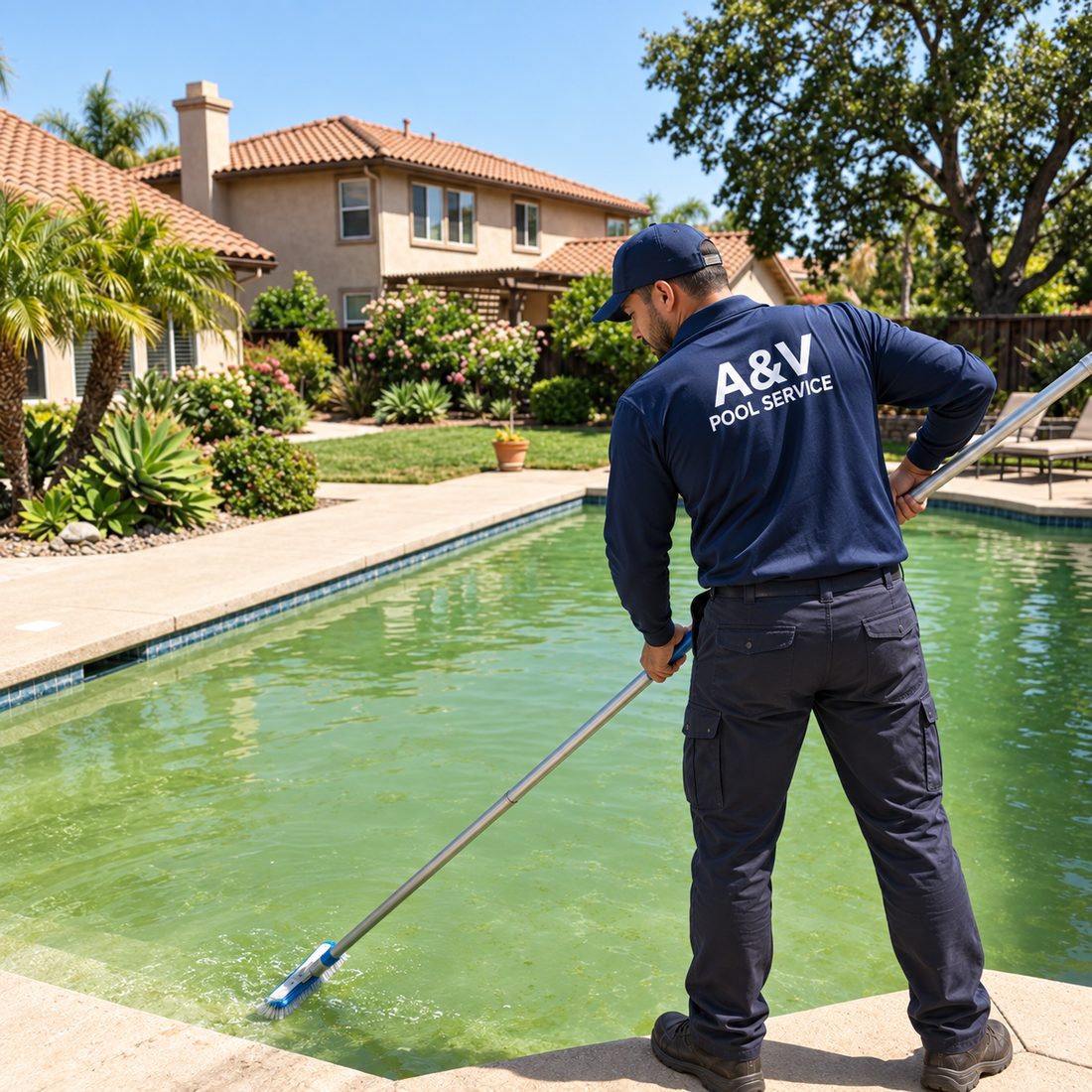
Idle pools and heavy tree debris make recoveries common here; our green pool cleanup works in stages without draining the shell.
Learn more →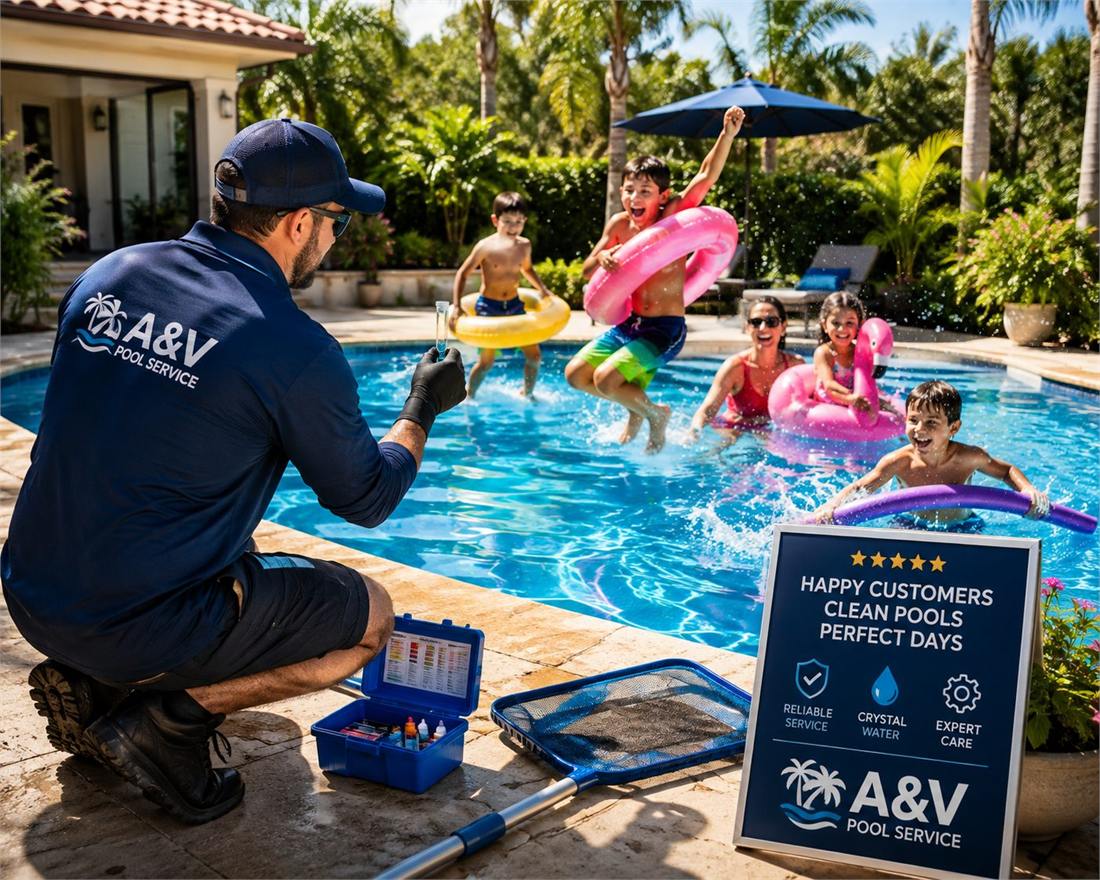
Once a pool is clear, weekly visits with chemicals included stop the cycle of letting it go green again.
Learn more →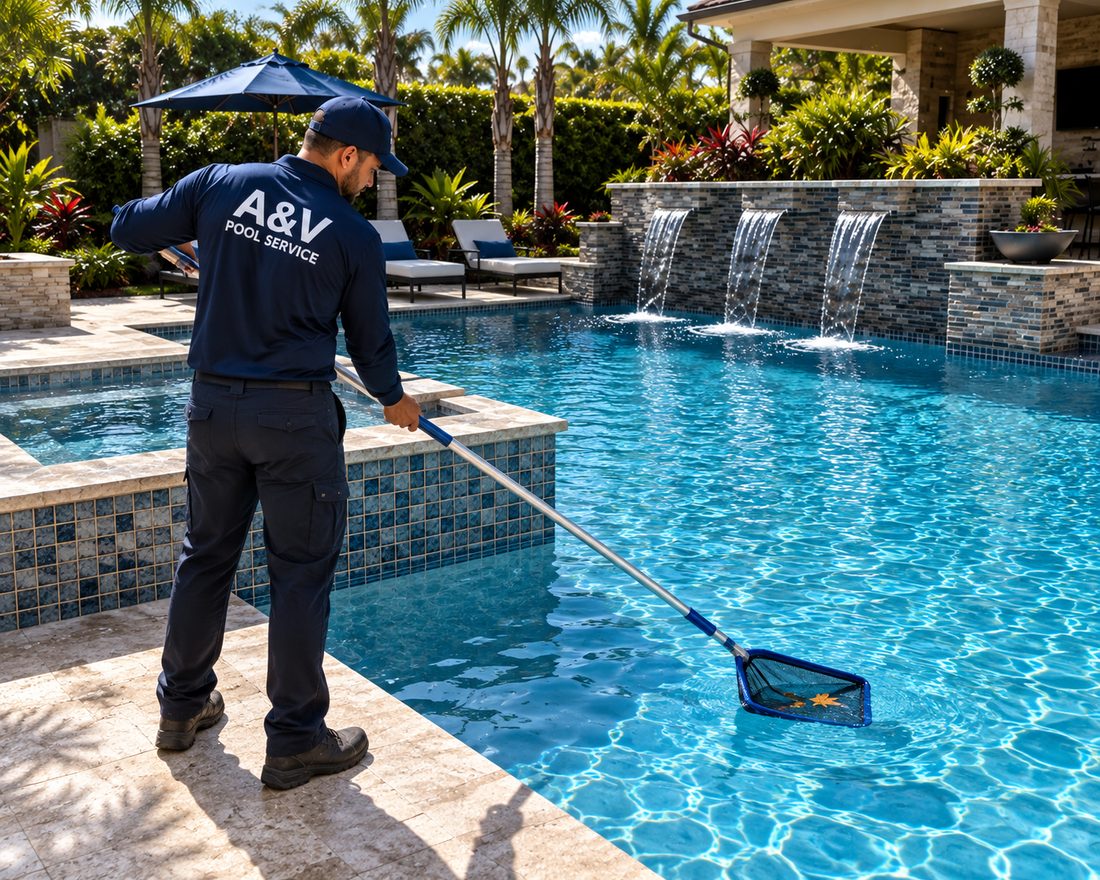
Fruit and leaf debris settle and stain quickly, so a thorough clean is often the first step on a neglected pool.
Learn more →Mango and other trees flower and shed, dropping petals and pollen into the water. Filters need more frequent cleaning.
Dropped fruit, afternoon storms and heat create the fastest algae growth of the year. We skim, brush and rebalance each visit.
Storms strip trees and fill pools with branches and leaves. We clear the debris, check the pump and bring chemistry back quickly.
One licensed crew for cleaning, repairs and leaks.
Almost always. We test the water, shock it, run and clean the filter repeatedly and vacuum the debris in stages. Most pools are clear within about a week, and the shell is not put at risk by draining.
Yes. Leaves, flowers and fallen fruit add organic load and phosphates that feed algae. You do not need to remove the trees; skimming, brushing and keeping the filter clean usually handle it.
It depends on the motor, seals and housing. We check each part and tell you honestly if a repair makes sense or if the cost of repairs is approaching a replacement.
Green pools and equipment failures are usually reached within 24 to 48 hours when possible, and most new weekly accounts can start the same week.
We cover 33157, 33177 and 33189, including the SW 112th Avenue corridor and the Coral Reef Drive area. Call with your address to confirm your service day.
Our South Miami Heights route links up with Cutler Bay, Goulds, Country Walk and Palmetto Bay.
Get a free quote today and let's get your water sparkling before the weekend.